

Occupational Therapy for Sensory Issues in Children: Benefits, Signs & How It Helps Daily Development
You notice it in small ways, your child covers their ears, walks away from certain clothing, or cannot stop moving. Even the normal stuff that people go through is draining for them.
Over time, these moments build up. Meltdowns, food struggles, and trouble focusing aren’t just behavior issues, they point to sensory challenges. This is where occupational therapy for sensory issues in children becomes important.
It’s not about changing your child, but helping them cope better. As sensory integration therapy and sensory processing disorder go hand in hand, children learn to be more calm, relaxed, and have better control. This is particularly helpful for people who require occupational therapy for autistic child.
Under appropriate guidance, occupational therapy for sensory problems can make life easier for children in many ways, helping them become more confident and relaxed.
What Is Occupational Therapy for Sensory Issues in Children? (Quick Answer)
Occupational therapy for sensory issues in children is focused on helping kids experience day-to-day sensations in a manner that feels more manageable and less overwhelming.
Helps them stay regulated
Sounds, textures, or movement don’t feel as intense over time, especially with the help of sensory integration therapy.
Makes daily tasks easier
Things like eating, getting dressed, or writing slowly become less stressful.
Builds coordination and control
Through simple activities, kids get better at balance and using their hands.
Brings more calm
Emotional reactions are more manageable when their system is not overwhelmed.
Focus less on changing your child and more about helping added comfort. It acts as a great complement to sensory processing disorder therapy, and also provides children needing an occupational therapist for autistic child in a more organic supportive manner.
Understanding Sensory Issues in Children
Sensory processing is basically how your child’s brain makes sense of things like sound, touch, light, and movement. For most kids, it just happens in the background. But for some, it doesn’t feel that simple.
Some children feel everything too strongly, normal sounds feel too loud, certain clothes feel uncomfortable, lights feel harsh. Others don’t feel enough, so they keep moving, jumping, or seeking pressure just to feel settled. This is where sensory processing disorder therapy helps, by slowly teaching the brain to handle these inputs better.
Common triggers include:
- Loud noises
- Certain textures
- Bright lights
- Movement
- Crowded spaces
When all of this builds up, it affects everything, focus, behavior, even how your child interacts with others. That’s why occupational therapy for sensory issues in children matters. Sensory integration therapy helps kids improve techniques to control their success, fear and fidgets over time.
This is often done alongside occupational therapy for autistic child, which allows children to be more comfortable in their own environment, at their own pace.
Signs a Child May Have Sensory Processing Difficulties
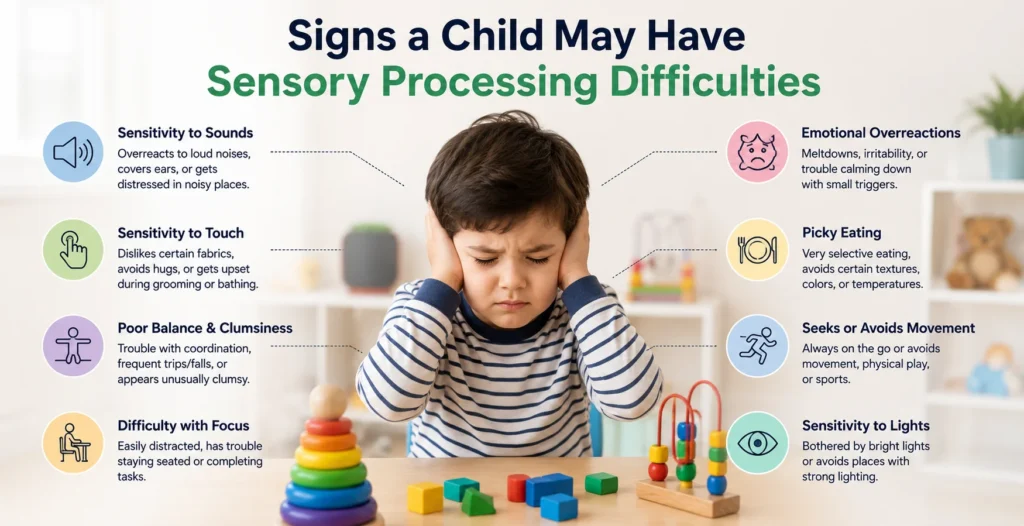
Most parents don’t notice just one thing, they notice patterns. Small behaviors that keep showing up again and again, until it starts to feel like something more.
Strong reactions to sounds or touch
Your child might cover their ears at normal sounds or pull away from touch. This kind of sensitivity is often worked on through sensory integration therapy.
Avoiding textures
Certain clothes, tags, or even food textures can feel unbearable. It’s not fussiness, it’s discomfort that may need sensory processing disorder therapy.
Difficulty sitting still
Constant movement, fidgeting, bouncing, pacing, can actually be your child’s way of trying to regulate themselves.
Frequent meltdowns
If these reactions are big and impact your child or your fluency, they generally mean your child is overwhelmed by the system rather than being naughty. This is why occupational therapy for sensory issues in children work.
Poor coordination
If your child frequently falls, runs into things or otherwise appears a little unsteady it is likely more than clumsiness.
Trouble focusing
Too much noise or activity can make it really hard for your child to stay on one thing.
Seeking movement or pressure
Jumping, spinning, or wanting tight hugs can actually be your child’s way of trying to feel more settled, something supported through sensory integration therapy.
Struggles with daily routines
Getting dressed or bath time turning into a struggle is common, especially for children who may benefit from occupational therapy for autistic child.
When these signs keep repeating, early support, including sensory processing disorder therapy, can make a real difference. Over time, children don’t just cope better, they start feeling more comfortable in their own world.
How Occupational Therapy Helps Children with Sensory Issues
Sensory challenges don’t just affect one area, they show up everywhere. That’s why occupational therapy for sensory issues in children focuses on helping kids in a more complete way.
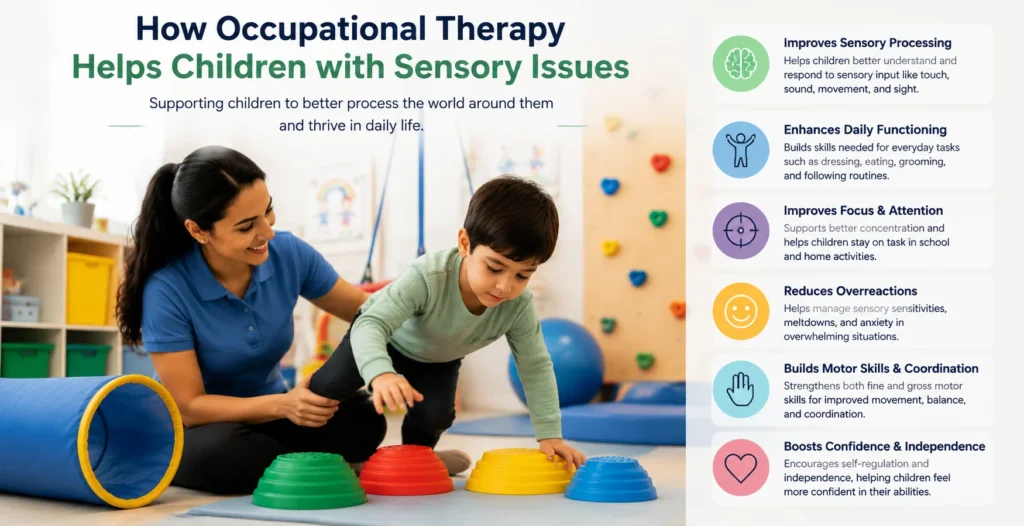
Sensory Regulation
Children learn how to handle overwhelming input without shutting down or reacting instantly. Through sensory integration therapy, they slowly build the ability to stay calm and respond better.
Motor Skill Development
A lot of this looks like play, balancing, catching, moving, but it’s building coordination and control. These activities also support progress seen in sensory processing disorder therapy, helping the body feel more in sync.
Daily Life Skills
Things like getting dressed, eating, or writing start becoming easier. When these everyday struggles reduce, confidence naturally improves.
This becomes even more effective when combined with occupational therapy for autistic child, where sensory and developmental needs overlap and need to be supported together.
Common Occupational Therapy Techniques for Sensory Development
For kids, therapy should feel like play. That’s the whole point. In occupational therapy for sensory issues in children, nothing is forced. It’s about helping your child feel comfortable enough to learn.
Sensory integration activities
Swinging, jumping, or playing with textures may look simple, but they’re part of sensory integration therapy and help your child handle sensations better.
Balance and coordination
Activities like walking on a beam or catching a ball build body control and confidence.
Fine motor skills
Drawing or stacking blocks helps with everyday tasks like writing or dressing.
Calming routines
Quiet spaces and simple routines help your child settle, often supported through sensory processing disorder therapy.
Play-based therapy
At the core, everything is built around play. Kids learn faster when they’re relaxed and engaged, which is why this works so well, especially for children in occupational therapy for autistic child.
It’s not about pushing your child to “adjust”, it’s about helping them feel okay in their own world, step by step.
Sensory Issues in Autism and Child Development
Sensory challenges are very common in children with autism. It’s not something separate, it’s part of how autism shows up in everyday life. When a child is constantly trying to manage sensory input, it starts affecting everything else around them.
Communication
When the brain is overloaded, focusing becomes more difficult. Hence, it is common for many kids to benefit by merging speech therapy for autistic child with sensory integration therapy.
Behavior
It can present as tantrums, irritability, or retreat. Over time, therapy for sensory processing disorder helps kids to feel less overwhelmed.
Focus and Attention
The saturated environment of stimuli made paying attention an almost impossible task. A common example of this is when the kid seems distracted, but this is simply their brains being overworked.
Social Interaction
Children may be turned off by crowds, noises, and getting touched which leads to withdrawal and no socializing.
This includes patterns involving the early detection of autism among children including minimal speaking, covering ears, refusal to be touched, or extreme reactions beyond what is expected from the situation. It is rarely one single item but more the complete view.
In many cases, combining occupational therapy for sensory issues in children with support from occupational therapy for autistic child helps address multiple areas together, leading to more stable and meaningful progress.
Other Therapies That Support Sensory Development
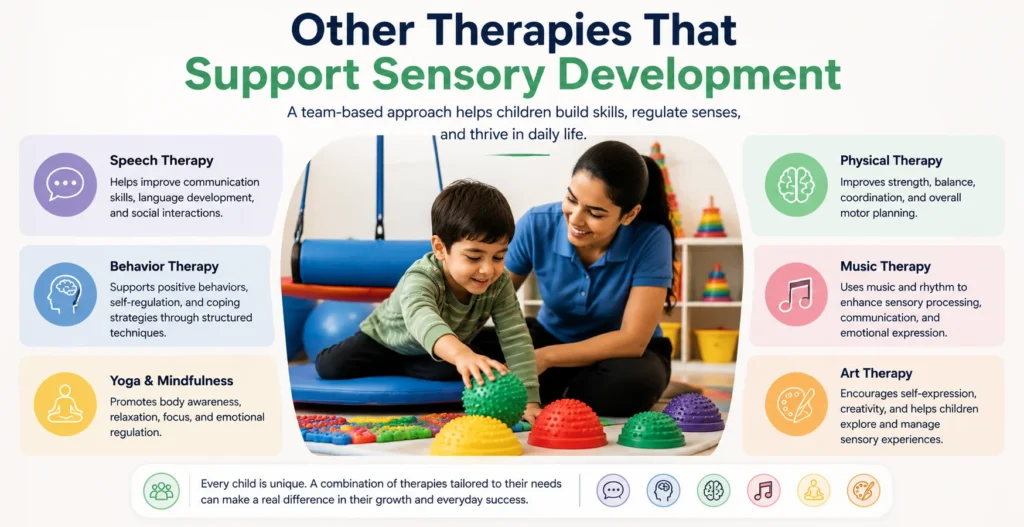
Sensory development improves faster when different therapies work together. The right mix supports your child more completely, especially alongside occupational therapy for sensory issues in children.
ABA helps children build consistent behavior and learning patterns.
- Reinforces positive responses
- Helps practice handling sensory challenges
- Works alongside sensory integration therapy
- Families often explore this through aba therapy in Kondapur, Telangana
Communication often becomes easier when sensory overload is managed.
- Improves expression and interaction
- Helps children stay focused during learning
- Supports progress in occupational therapy for autistic child
- Commonly paired with speech therapy for autistic child programs
Sensory & Multisensory Therapy
A calm sensory environment helps children feel settled before learning.
- Reduces overwhelm through structured input
- Supports regulation through sensory processing disorder therapy
- Uses controlled sensory experiences
- Available through setups like snoezelen therapy for autism in Hyderabad
As children grow, understanding emotions becomes just as important.
- Builds coping strategies
- Helps manage sensory-related anxiety
- Strengthens regulation with sensory integration therapy
- Often accessed via cognitive behavioral therapy in Kondapur
All these help develop behavior, communication skills, and emotions in the child. Together with occupational therapy for sensory issues in children, all these will make a greater difference in practical settings.
How Parents Can Support Children with Sensory Issues at Home
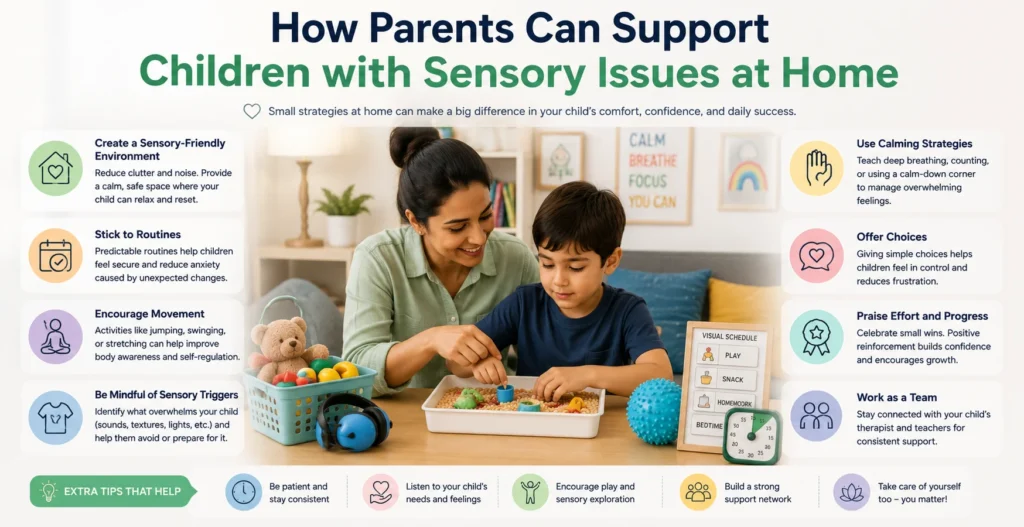
Just as with therapy, what you do at home is important too. It is possible to learn about what makes the process easier and harder for the child and it is essential in combination with occupational therapy for sensory issues in children.
Maintain predictable routines: A simple structure allows your child to feel safe, while also smoothly blending sensory integration therapy as well.
Create calm, sensory-friendly spaces: When your child is feeling overwhelmed a quiet corner with ambient lighting may help them come back to earth.
Encourage movement and play: Sensory processing disorder therapy includes engaging in actions such as jumping or running that can help facilitate the normalization of the body.
Reduce overwhelming triggers: Reducing specific sounds, lights, or textures can stop meltdowns.
Support communication and emotional expression: This especially applies to children who are in occupational therapy for autistic child.
Stay patient and consistent: Progress takes time, small, steady efforts matter most.
Centers like Riddle Blooms help parents continue this support at home, so it becomes part of everyday life.
Choosing the Right Occupational Therapy Center
When you’re choosing support for your child, especially for occupational therapy for sensory issues in children, it’s important to focus on what actually makes a difference.
Experienced therapists
You should consider seeking professionals who can differentiate sensory problems according to unique child needs, particularly in occupational therapy for autistic child.
Sensory-friendly environment
The space should not be overwhelming, it should feel grounded and safe. A naturally supportive sensory integration therapy environment is often a product of setting it up right!
Personalized therapy plans
A quality center will start with an evaluation of your child, then develop a strategy based on what your child requires.
Multidisciplinary support
Having access to therapies like ABA and speech therapy bolsters overall development with sensory processing disorder therapy.
Child-focused approach
Therapy should match your child’s comfort level and learning style.
Parent involvement and tracking
You should get regular updates and practical strategies to continue support at home.
Good autism therapy in Kondapur centers brings all of this together, creating consistent, meaningful progress for your child.
Conclusion
Sensory problems may greatly impact learning, behavior, and social interaction of a child. When your child finds it difficult to do even those things which other kids find easy, it’s true, and it’s hard to see. But there is hope for improvement with appropriate help.
Sensory issues treatment in children through occupational therapy provides an opportunity for developing confidence and independence through practical steps. With the help of therapies such as sensory integration therapy, sensory stimulation is managed better so that daily activities become less frustrating.
Sensory processing disorder therapy differs from other treatments as it’s aimed not at reducing the number of sensitive factors but at managing them correctly. Many parents choose sensory processing disorder therapy together with autism occupational therapy.
In specialized centers such as Riddle Blooms, each child gets individual advice and assistance which makes the process much easier and brings better results.
Frequently Asked Questions (FAQs)
What is occupational therapy for sensory issues in children?
It’s support that helps your child deal with everyday things, sounds, touch, movement, without feeling overwhelmed. Occupational therapy for sensory issues in children gives them ways to handle it better.
What are common signs of sensory difficulties?
Your child may be hypersensitive to sound or touch, prone to tantrums, unable to concentrate, or clumsy. These behaviors will be addressed through sensory processing disorder therapy.
How does sensory integration therapy help?
This helps your child gradually acclimate to different sensations and they will feel like “not too much.” Most often, professional evaluation and referral for treatment involves simple activities or play-based interaction.
Can it help autistic children?
Yes, occupational therapy for autistic child is often an important part of support, especially when sensory challenges are involved.
Where to find support in Kondapur?
Seek services which provide structured sensory assistance by experienced practitioners in a soothing environment.


Leave a Reply