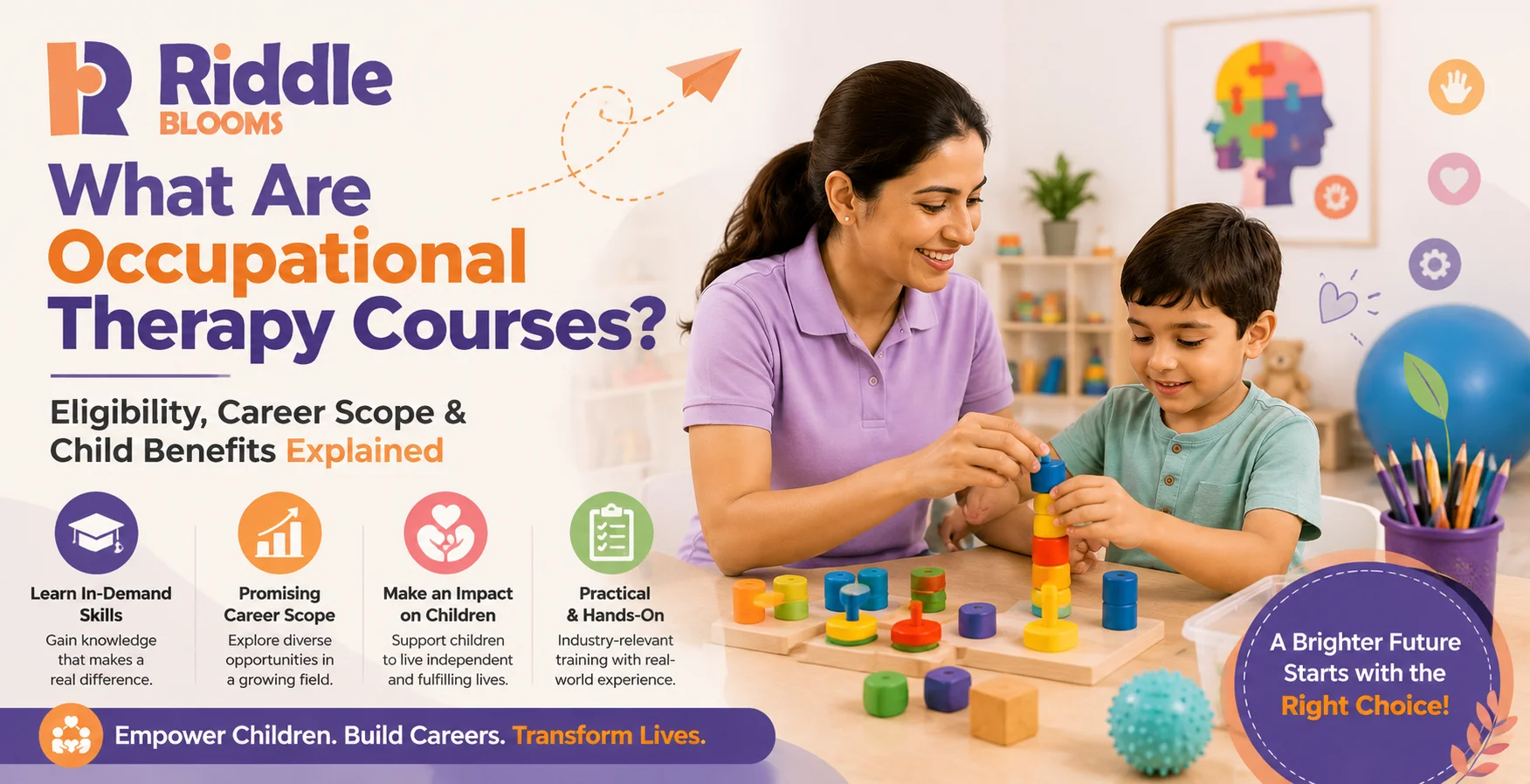
What Are Occupational Therapy Courses? Eligibility, Career Scope & Child Benefits Explained
Healthcare is no longer about hospitals but about everyday activities. It is about enabling an individual to perform daily functions such as holding a spoon without spilling, writing one’s name without difficulty, or doing something else without becoming stuck. That is precisely why there is increased interest in occupational therapy programs today.
More parents today are noticing when something feels “off” with their child, maybe they’re slower at picking up basic skills, maybe writing feels like a task, or maybe they avoid certain textures or movements. At the same time, adults with injuries and physical disabilities are searching for ways to become independent once again.
The importance of learning what is occupational therapy comes in handy here. It is simple and down-to-earth. It is about making life easy and comfortable.
And who does all of this? Those who undergo occupational therapy courses.
If you have ever wondered about what is occupational therapy and you are thinking about pursuing an occupation where you can see tangible results, then you are in the right place. You will learn everything about what is occupational therapy and why there is an increasing demand for children’s occupational therapy courses.
What Are Occupational Therapy Courses?
Occupational therapy courses are training courses designed to teach you how to assist people in managing daily activities by improving their ability to move, coordinate, or perform other life functions. The courses will train you on how to assist children and adults in being more independent.
What Is Occupational Therapy?

Occupational therapy is just about making life easier for others in performing daily activities.
That could be:
- A child learning how to hold a pencil properly
- Someone figuring out how to button their shirt again after an injury
- A person learning to manage sensory overload in daily situations
- What is occupational therapy at its core? It’s about independence.
For kids, this becomes even more important. Some children don’t naturally pick up certain skills, like coordination, balance, or even sitting still and focusing. And instead of brushing it off as “they’ll grow out of it,” more parents are now choosing to understand what is occupational therapy and take action early.
Professionals trained through occupational therapy courses step in with structured, proven methods, not guesswork. And when it comes to occupational therapy for kids, starting early can completely change how a child learns and grows.
What You Learn in Occupational Therapy Courses
This isn’t one of those courses where you just sit and memorize theory. Occupational therapy courses are practical, you learn things you’ll actually use.
Here’s what that looks like:
Understanding the Human Body
You get knowledge about how the body works and moves, how muscles and joints function and interact with the brain. This allows you to determine what causes certain difficulties.
Motor Skills Development
A significant component of occupational therapy classes is mastering skills that improve coordination such as grasping, balancing, and moving. This is especially true for occupational therapy for kids, since the skills are still developing.
Therapy Techniques
You’re trained in real methods, activities, exercises, and routines that therapists use every day. Not theory, actual tools.
Child Development
You start understanding how kids think, behave, and learn. This is where occupational therapy starts making real sense in practical situations.
Real-Life Practice
Good occupational therapy courses don’t keep you stuck in books. You observe real sessions, handle cases, and see how therapy actually works in real life.
Eligibility, Duration & Course Types
If you’re thinking about getting into occupational therapy courses, here’s the honest breakdown.
Who Can Apply?
- If you’ve completed 10+2, you can start with basic programs
- For advanced occupational therapy courses, you might need a related degree
- More than marks, what matters is patience and interest in helping people
How Long Do They Take?
- Short certificate occupational therapy courses: 3–6 months
- Diploma programs: around 1–2 years
- Full degree occupational therapy courses: 3–4 years
Types of Courses:
- Short-term certifications
- Diploma programs
- Bachelor’s degrees
- Specialized courses
If you’re looking into occupational therapy courses in Kondapur, Riddle Blooms is one place where the focus is more on practical exposure, especially around occupational therapy for kids.
Career Scope After Occupational Therapy Courses
Let’s talk about what really matters, what happens after.
The good thing about occupational therapy courses is that they don’t box you into one path. There’s flexibility.
Roles You Can Take Up
- Occupational Therapist
- Pediatric Therapist
- Rehabilitation Specialist
- Sensory Therapy Expert
Where You Can Work
- Hospitals
- Therapy centers
- Schools
- Private clinics
As awareness increases among people about what is occupational therapy, the demand continues to grow. Currently, one of the sectors in which there is great need for qualified personnel is occupational therapy for kids.
Key Benefits of Occupational Therapy Courses
Choosing occupational therapy courses isn’t just about getting a job, it’s about choosing the kind of work you want to do every day.
You Actually Help People
This isn’t behind-the-scenes work. You see progress in real time.
Demand is Growing
More awareness of what is occupational therapy means more people are looking for therapists.
It’s a Stable Field
Healthcare doesn’t go out of demand, and neither do occupational therapy courses.
You Can Choose Your Area
You can work with adults, rehabilitation, or focus completely on occupational therapy for kids.
How Occupational Therapy Helps Children
This is where everything comes together.
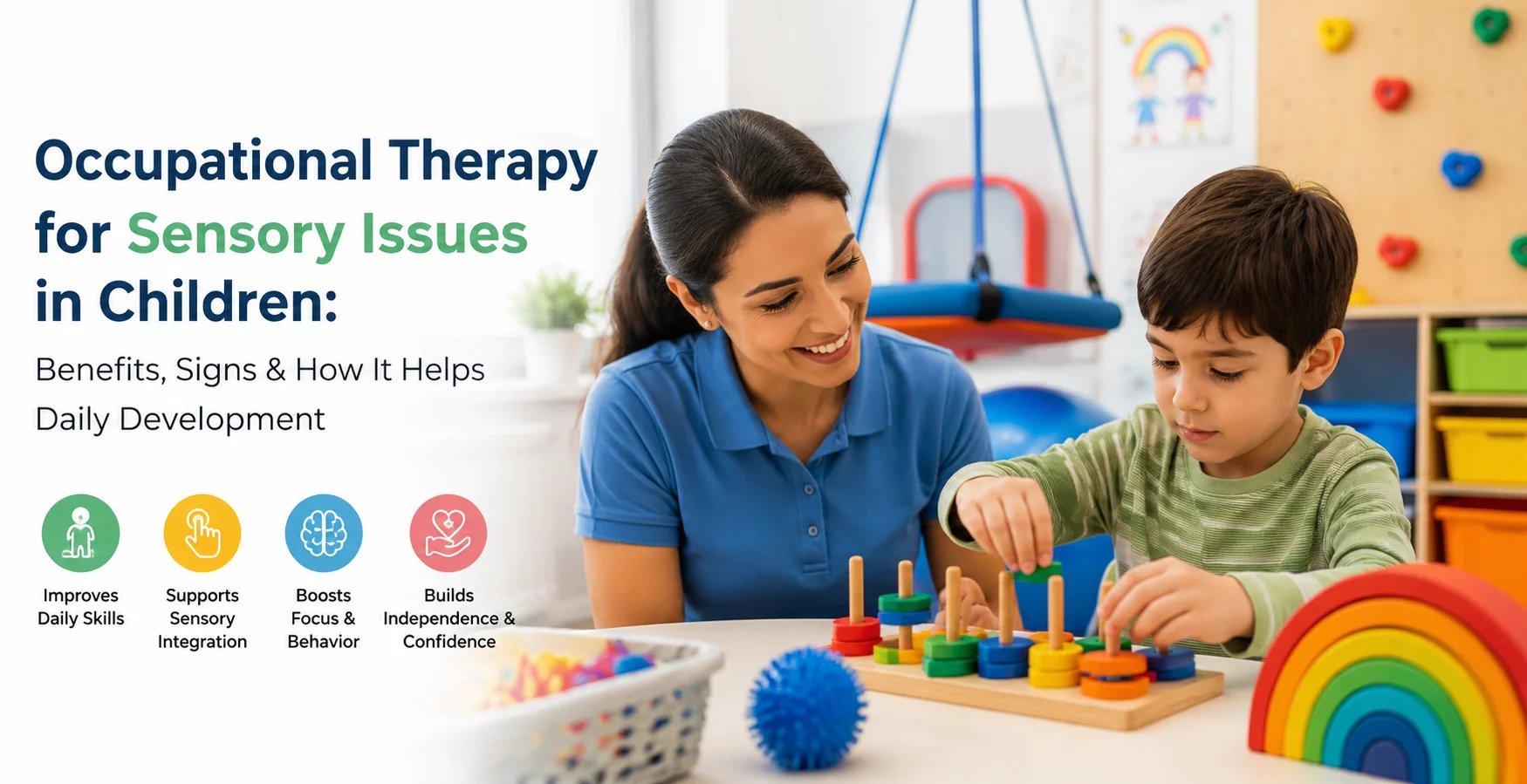
Occupational therapy for kids is all about helping children cope with their daily routines without getting frustrated.
Better Coordination
Kids improve how they move, write, and balance.
Daily Tasks Become Easier
Eating, dressing, writing, things that felt difficult start becoming normal.
Helps with Delays
Children who are slightly behind can catch up with the right support.
Confidence Builds Naturally
When a child starts doing things independently, you can literally see the change.
This is the reason why knowledge about occupational therapy is extremely important for parents.
When Does a Child Require Occupational Therapy?
Many parents delay too much time hoping that everything will improve by itself.
But this doesn’t always happen.
Some indications to look for include:
- Problems with holding a pencil
- Bad balance or falling down frequently
- Delayed development
- Problems with eating and getting dressed
- Sensitivity to sounds, tactile, and other stimuli
In such cases, occupational therapy for children becomes really useful.
Moreover, this increased demand is precisely the reason why occupational therapy courses are so relevant today.
Occupational Therapy vs Other Therapies
A lot of people get confused here, and honestly, it’s fair. Everything sounds similar until you actually break it down.
If you already understand what is occupational therapy, this section will just help you see where it fits compared to other therapies.
Occupational Therapy vs ABA Therapy
If you’ve ever searched aba therapy near me, you’re probably looking at therapy focused on behavior, especially for children with autism.
Here’s the difference:
ABA therapy targets behavior, or how a child behaves, the way they communicate or interact
When you go to the occupational therapy courses, they will prepare you to deal with the daily life skills that come with developing movement and coordination and independence.
Both are useful. Occupational therapy for kids is more than behavior. This focuses on how a child really does in daily living, writing, eating, playing, balancing.
Occupational Therapy vs Cognitive Behavioral Therapy (CBT)
If you’ve seen cognitive behavioral therapy near me, that’s more about mental health.
CBT works on thoughts, emotions, and behavior patterns
What is occupational therapy? It’s about doing, how someone physically and functionally manages their daily life
CBT trains you to think differently, and occupational therapy courses train you to help people live differently.
Occupational Therapy vs Speech Therapy
A speech therapy course might be something you have stumbled upon, too.
Speech therapy all about communication, talk tongue speak language expression
Occupational therapy classes list all they require more broadly to encompass movement, coordination, sensory challenges and autonomy
So, if you are still asking yourself what is occupational therapy; here is the easiest way to see it:
You bind physical function, mental acuity, and day-to-day ability all at the same time.
How to Choose the Right Occupational Therapy Course
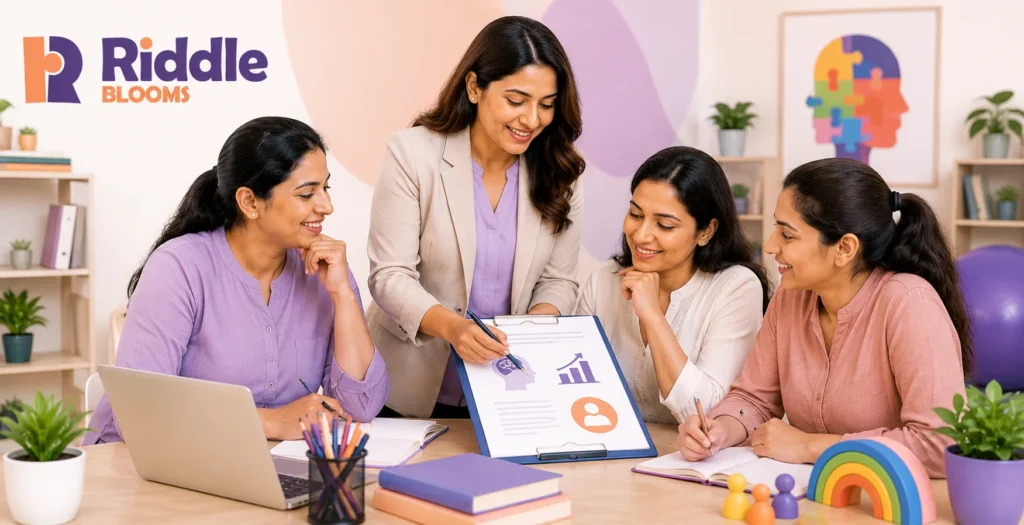
Not all occupational therapy courses are worth your time. Some look good online but don’t actually prepare you for real work.
So here’s how to choose smart:
Look for Proper Certification
Make sure the course is recognized. Good occupational therapy courses should actually hold value when you step out into the field.
Check for Practical Exposure
This is non-negotiable. You cannot learn what is occupational therapy just by reading.
You need:
- Live sessions
- Case handling
- Real interaction
Review the Curriculum
A strong course should include:
- Anatomy
- Child development
- Therapy techniques
- Real-life applications
If it’s too theoretical, it won’t help you in real situations, especially in occupational therapy for kids.
Experience of Faculty Members
Gain insight from those who have practiced in therapy rather than just teaching it.
If you are looking into occupational therapy courses at Kondapur and want something that emphasizes hands-on experience, then Riddle Blooms is among the choices worth considering.
Conclusion
Occupational therapy courses not only involve theoretical learning but also learning to assist people in functioning efficiently.
You now understand:
- what is occupational therapy
- how occupational therapy courses are structured
- where they can take you
- and why occupational therapy for kids is becoming so important
The demand is growing. Awareness is increasing. Parents are actively looking for support instead of waiting.
And that’s exactly why professionals trained through occupational therapy courses are needed now more than ever.
If you want a career that feels real, stable, and meaningful, this is one of those paths that actually delivers all three.
FAQs
What are occupational therapy courses?
Occupational therapy courses are training programs designed to help improve the skills they use in daily life such as coordination, independence, and coordination by using structured therapy techniques.
What exactly is occupational therapy?
An Occupational Therapy is a therapeutic approach which assists with the more effective performance of daily living tasks, such as writing and eating, dressing, or ambulation.
Why would children benefit from occupational therapy?
Occupational therapy for children builds motor skills, coordination, attention and independence. It gives support in the development of children with impairment and builds confidence after a certain period.
Who can take occupational therapy courses?
Occupational therapy courses are available to anyone with an interest in health care and wellness, and who has completed basic education.
Is occupational therapy a good career choice?
Yes. There is more awareness of what is occupational therapy and with increased demand for the occupational therapist for kids as well, this field offers stability, meaning and the opportunities of long-term growth.
Categories
- Children (8)
- Party (7)
- shipband (1)
- thesmartschool (1)
- Uncategorised (37)
Leave a Reply