

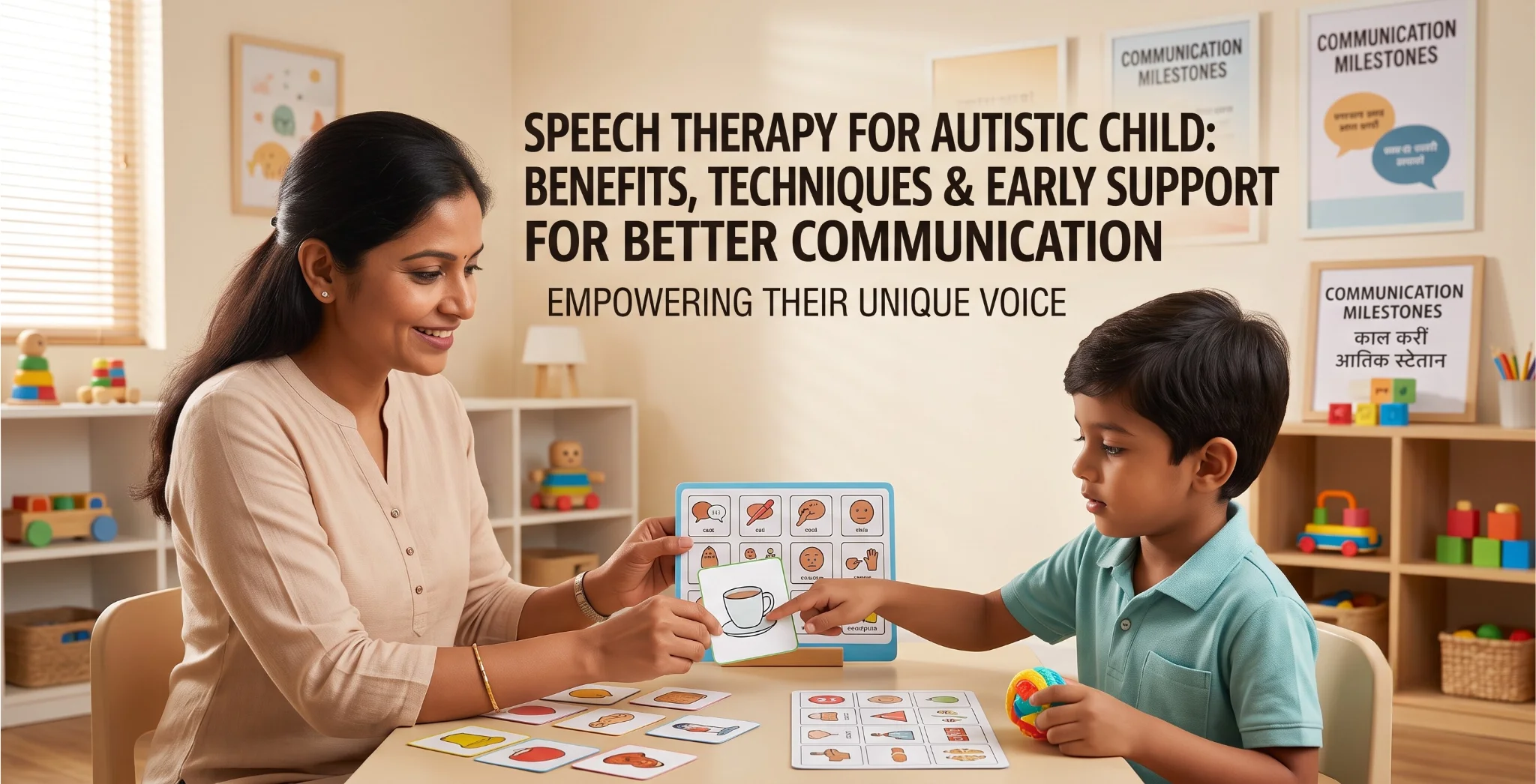
Speech Therapy for Autistic Child: Benefits, Techniques & Early Support for Better Communication
For many parents, the first worry isn’t behavior, it’s communication. You begin to notice that your child is not talking like other children or is unable to tell you their wants. Sometimes they don’t respond the way you expect. And that leaves you wondering, is this just a delay, or is it something more?
That’s where speech therapy for autistic children really comes in. When there’s speech delay autism, or your child finds it hard to form words or express emotions, it can affect everyday moments, from simple needs to connecting with you. You know they’re trying. They just need a way to get it out.
The good part? Early support actually helps. With the right approach, children can slowly build how they communicate and connect. Speech therapy for autistic child plays a big role in communication therapy for autism, giving them tools that feel natural, not forced.
In this guide, you’ll understand how it works, the speech therapy benefits for autism, when to look for support, and what actually helps your child communicate better over time.
What Is Speech Therapy for Autistic Child? (Quick Answer)
Speech therapy for autistic child is all about guiding your child on the path of communication in their own way, and not through coercion. While autism speech therapy is systematic, it is flexible enough to adapt to your child’s learning style.
Here’s what it focuses on:
- Improves speech clarity and language development
Your child gradually learns to pronounce words more clearly and build vocabulary, which is especially helpful in cases of speech delay autism.
- Supports understanding and following instructions
When your child starts understanding what’s being said, everyday interactions become less confusing and more meaningful.
- Builds expressive communication skills
It helps your child express needs, feelings, and thoughts, even if that doesn’t always start with full sentences.
- Enhances social interaction
With communication therapy for autism, children can learn skills that will help them interact more effectively with their family members and other children.
In conclusion, speech therapy for autism spectrum disorder is one of the major speech therapy benefits for autism spectrum disorder. This form of therapy can significantly enhance the ability of children to speak, understand, and interact.
Understanding Speech & Communication Challenges in Autism
Autism affects each child in a unique manner when it comes to speech or communication. Some autistic children can only produce limited speech or have difficulty using language socially, such as those suffering from speech delay autism.
These children display:
- Vocabulary limitations, not many words used
- Repetitive speech, saying the same phrases without clear meaning
- Difficulty understanding, trouble following instructions
- Conversation challenges, struggling with back-and-forth interaction
But communication isn’t just speech. It also includes gestures, eye contact, and social response. That’s why speech therapy for autistic child and communication therapy for autism focus on overall interaction, not just words.
These are some key speech therapy benefits for autism, helping children communicate in ways that feel natural to them.
Signs a Child May Need Speech Therapy
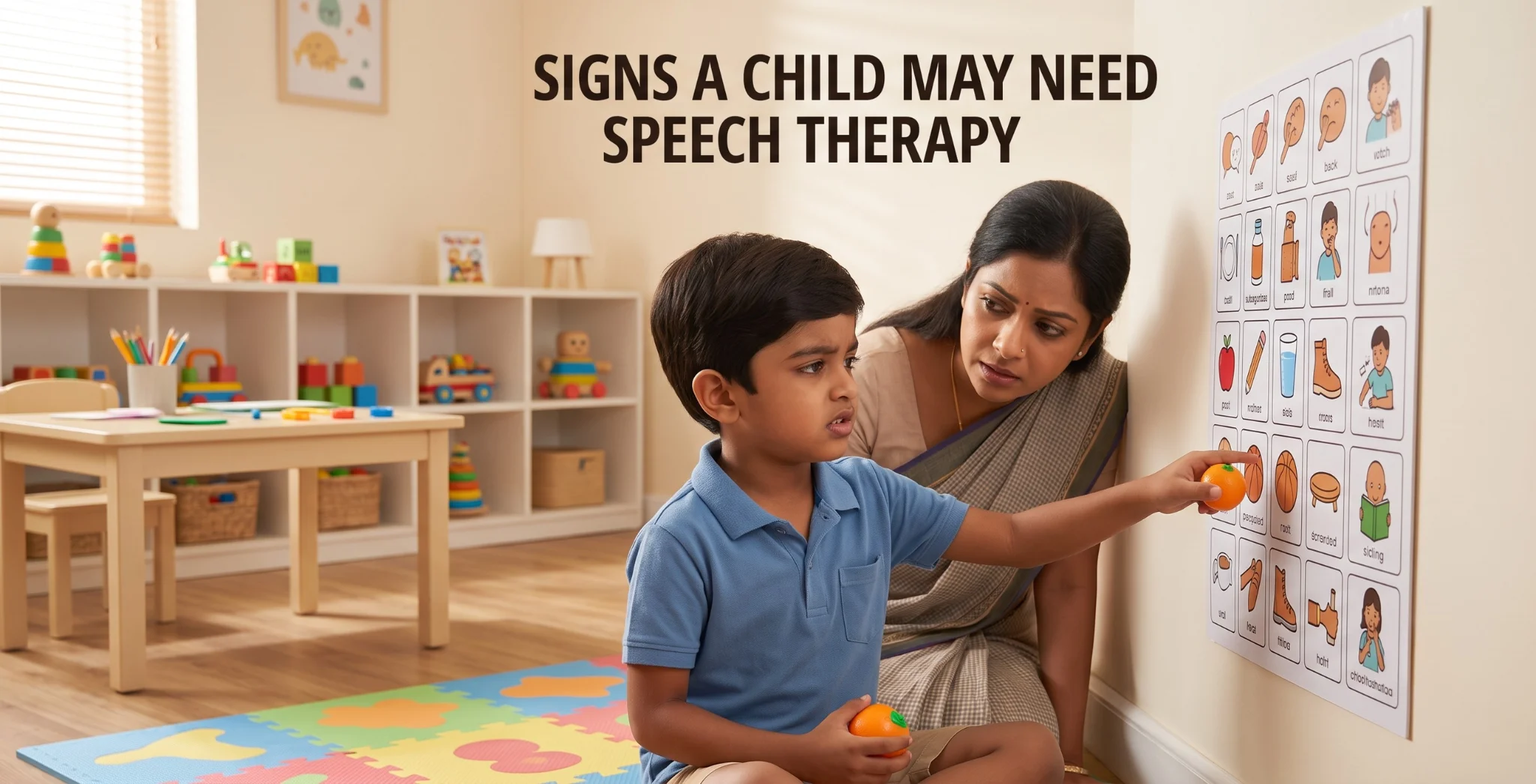
Parents are usually the first to feel when something’s off, and that instinct matters. Here are some signs to pay attention to, especially when speech delay autism may be a concern:
- Delayed speech milestones
Not reaching expected talking stages for their age.
- Difficulty forming words or sentences
Speech may be unclear, limited, or not progressing into phrases.
- Not responding when called
They may not react consistently, even when they can hear you.
- Limited eye contact
Less engagement during interaction or communication.
- Struggling to express needs
Leading to frustration or non-verbal ways of communicating.
- Difficulty with social interaction
Less interest in playing or engaging with others.
- Repetitive words or phrases
Saying things without clear meaning or context.
When these patterns show up consistently, speech therapy for autistic child can help. Through communication therapy for autism, children learn to express themselves better. These are some vital speech therapy benefits for autism, and especially when early support is received.
How Speech Therapy Helps Children with Autism
Speech therapy for autistic child helps with way more than speaking, it assists children to communicate in ways that are effective for them. Especially in cases of speech delay autism, the goal is not perfection, but connection.
Language Development
Your child gradually builds vocabulary and starts putting words together in a way that makes sense. Instruction starts sticking because there is understanding now, and that is an important element of communication therapy for autism.
Social Communication Abilities
A therapist helps your child interact naturally without trying to make him look into the eyes, but rather engage him socially. The kid learns how to have a turn in the conversation and stay focused. It also means being able to show feelings rather than showing them with actions. Those speech therapy benefits for autism will help you see your child developing in daily routine.
Nonverbal Communication Support
Every child does not communicate through speech, and this is fine. The therapy uses gestures, facial expressions, as well as visual techniques such as pictures or AAC systems. Through communication therapy for autism, the kids learn that communication is possible using various approaches that suit them best.
Here are some of the most common speech therapy benefits for autism, allowing children to feel more confident and communicate better during everyday life. Your child is less frustrated because they can communicate their needs to you. You understand your kid better. Connection actually happens.
Common Speech Therapy Techniques for Autism
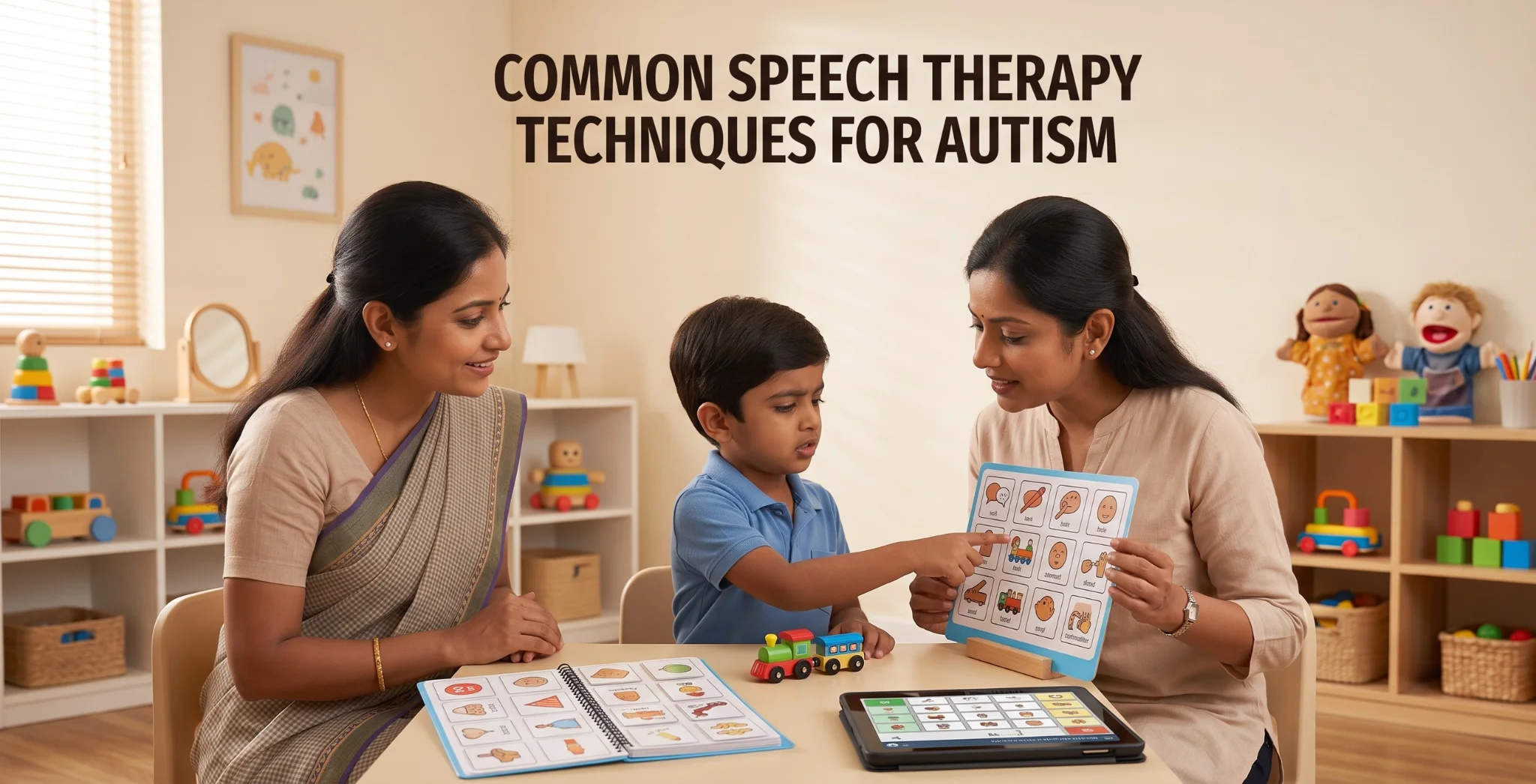
Therapists don’t follow one fixed method, they adjust techniques based on what your child responds to best, especially in cases of speech delay autism.
- Play-based communication therapy: Learning happens through play, not pressure. Your child communicates while playing, which feels natural and engaging.
- Picture Exchange Communication System (PECS): Children use picture cards to express needs. This builds understanding that communication leads to results, a key part of communication therapy for autism.
- Articulation exercises: For children who speak but aren’t clear, therapists work on specific sounds through simple, repeatable activities.
- Sensory-integrated activities: Communication is combined with music, movement, or textures to make learning easier and more effective.
- Social communication training: Children learn how to take turns, listen, and respond in conversations, skills that don’t always come naturally.
These approaches are some of the practical speech therapy benefits for autism, helping children learn comfortably instead of feeling forced.
Overall, speech therapy for autistic child becomes more effective when it feels like something the child wants to engage in, not something they’re made to do.
Speech Delay vs Autism: Understanding the Difference
This part matters. While speech delay autism and even autism are not interchangeable, they do come from places of overlap. At times, it looks similar at the beginning, but the overall pattern is what has a significant impact.
Another question parents may have is why some toddlers or 2 year old children with autism show signs of autism as well as the presence of delayed speech, and this helps to explain why it becomes essential to assess the bigger picture.
Area | Speech Delay | Autism |
Speech | Delayed but improving | Delayed or used differently |
Social Interaction | Mostly typical | Limited or different |
Behavior | No repetitive patterns | Repetitive behaviors present |
Sensory Response | Usually typical | Sensitivity to sounds/textures |
What matters is not just the delay, but everything around it. When multiple areas are affected, the support needed is different. That’s where speech therapy for autistic child becomes part of a broader plan, combining communication therapy for autism with other approaches to deliver real speech therapy benefits for autism.
Other Therapies That Support Communication Development
When you start noticing the signs of autism in toddlers, it’s normal to feel unsure about what helps. No single therapy does everything, but together, they support how a child learns, communicates, and responds to the world.
ABA Therapy
Often the starting point, especially when autism symptoms in 2 year old children become clearer. It builds learning through small, structured steps.
- Builds behavior and learning
- Supports communication development
- Encourages routine and consistency
Speech Therapy
Helps children express themselves in ways that work for them, especially when the signs of autism in toddlers include communication difficulty.
- Helps express needs clearly
- Improves language and interaction
- Speech therapy for autistic child supports daily communication
Occupational Therapy
Supports daily functioning, especially when autism red flags in toddlers include sensory or coordination challenges.
- Develops motor skills
- Helps with daily tasks
- Supports independence
Sensory Therapy
Helps children feel calmer and more regulated when the early signs of autism show up through sensory overwhelm.
- Manages overwhelming environments
- Improves emotional responses
- Creates calming sensory spaces
Together, these therapies support children across communication, behavior, and daily life.
Over time, with consistency, children don’t just adjust, they grow.
How Parents Can Support Speech Development at Home
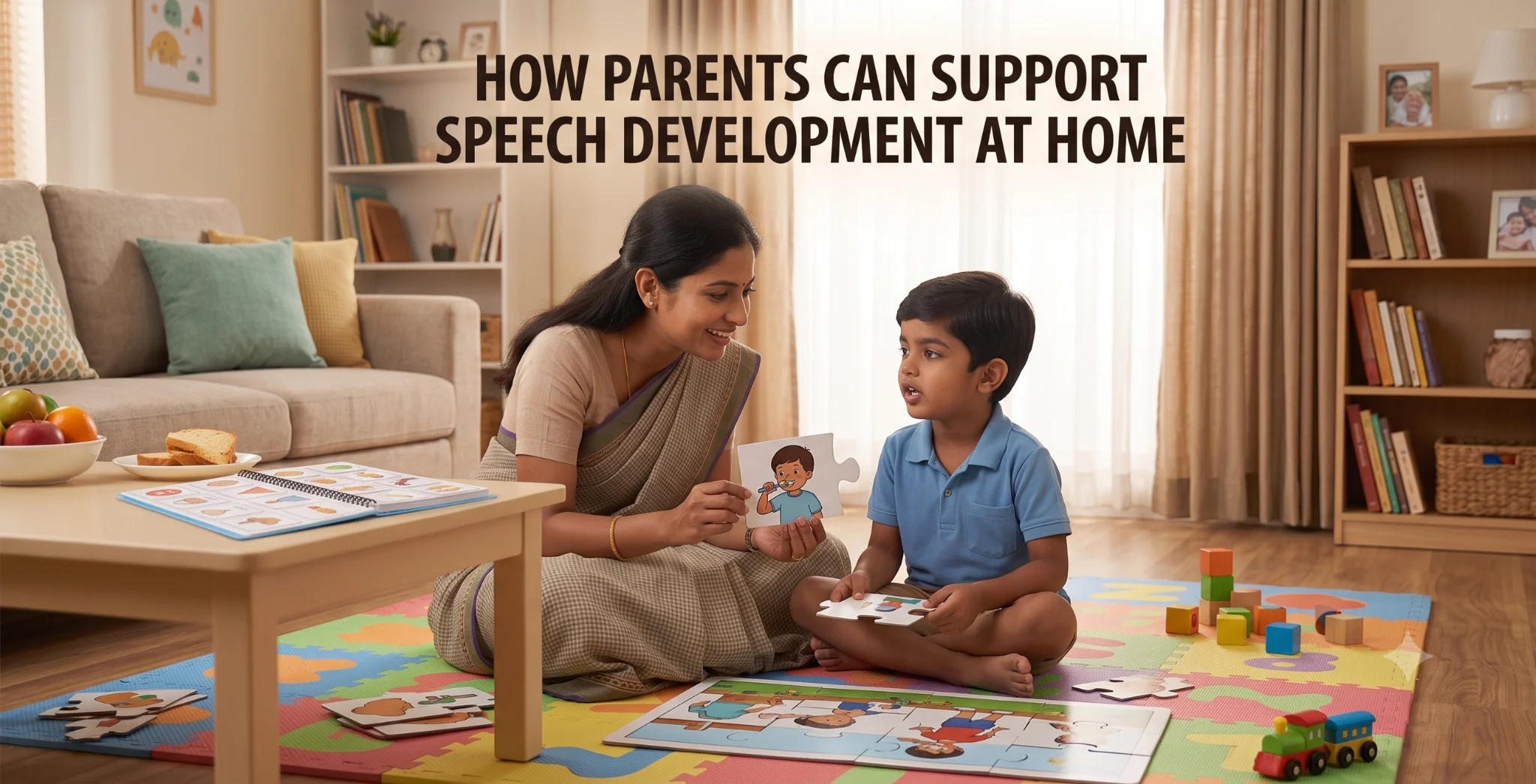
What you do at home matters just as much as therapy. You’re with your child the most, so your role in communication therapy for autism is important, especially when dealing with speech delay autism.
- Talk through daily moments
Simple narration builds language naturally and supports speech therapy benefits for autism in everyday situations.
- Keep language simple
Short, clear sentences help children with speech delay the autism process and respond better.
- Read together
Picture books strengthen vocabulary and improve engagement, which supports communication therapy for autism.
- Limit screen time
Real interaction improves communication skills and enhances speech therapy benefits for autism
over time.
- Use play to communicate
Play-based interaction makes communication therapy for autism feel natural instead of forced.
- Encourage every effort
Responding to words, sounds, or gestures builds confidence and supports speech delay autism progress.
- Stay consistent
Small, repeated efforts at home strengthen long-term speech therapy benefits for autism.
Centers like Riddle Blooms help parents apply these strategies daily, making communication therapy for autism more effective beyond sessions.
Choosing the Right Speech Therapy Center
However, when seeking help to support your child, concentrate on what really matters, particularly if you notice early signs of speech delay autism.
Experienced therapists
Go for specialists who have worked before in helping children with autism with speech delays.
Individual therapy program
Children are unique in nature, hence the need for personalized programs that address each child’s needs separately.
Child-friendly center
This makes children feel comfortable and ready to learn.
Parental involvement
The best centers also train parents how to continue helping their child after therapy.
Multidisciplinary treatment options
Availability of other therapies like ABA and OT is another important consideration.
Progress monitoring
Regular tracking helps ensure your child is improving and getting the right support.
Good autism therapy in Kondapur centers bring these elements together, helping children experience real speech therapy benefits for autism over time.
Conclusion
Communication is one of the most important elements in the process of developing the child, and communication delays put parents under a lot of stress. As a parent, you try to connect with your child, but at the same time your child wishes to be understood by you.
But here’s what matters: with the right support, progress is possible. Speech therapy for autistic child helps improve communication, confidence, and daily interaction in meaningful ways. Whether it’s speech delay autism or broader communication challenges, early support through communication therapy for autism plays a key role in long-term development and brings real speech therapy benefits for autism.
With consistency and your involvement, children can build communication skills over time. Your child deserves to be understood, and to understand others.
Centers like Riddle Blooms provide structured, personalized support for families navigating this journey. With the right guidance, speech therapy for autistic child becomes more than therapy, it becomes a path to connection.
FAQs
How does speech therapy help an autistic child?
Ability to communicate with speech therapy for autistic child in which it abandons and helps children express their needs, understand those of others, and gain confidence. These are the most important benefits of speech therapy for autism.
What are common signs of speech delay in autism?
Limited speech, repetitive words, and difficulty understanding are common in speech delay autism and may need support.
When should speech therapy start?
Early support (18 months–3 years) is ideal, especially when speech delay autism is noticeable.
What are the benefits of communication therapy for autism?
Communication therapy for autism improves speech, interaction, and reduces frustration, clear speech therapy benefits for autism.
Where to find support in Kondapur?
Look for speech therapy for autistic child within communication therapy for autism programs addressing speech delay autism for better speech therapy benefits for autism.
Leave a Reply